


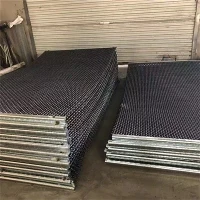


As a supplier of railway wire fences, I've had extensive experience with these products. While railway wire fences offer numerous advantages, it's essential to be aware of their disadvantages as well. This blog will delve into the drawbacks of railway wire fences to provide a comprehensive understanding for potential buyers.
1. Aesthetic Limitations
One of the most apparent disadvantages of railway wire fences is their aesthetic appeal, or rather, the lack thereof. These fences are typically utilitarian in design, consisting of simple wire mesh stretched between posts. Their industrial appearance can be unappealing in certain settings, especially in areas where visual harmony with the surrounding environment is crucial.
For instance, in a scenic rural area or a well - landscaped urban park, a railway wire fence may stand out as an eyesore. It fails to blend in with the natural beauty of the landscape and can disrupt the overall visual flow. In contrast, other types of fences, such as wooden or ornamental iron fences, can add a touch of elegance and charm to the surroundings. If a location requires a fence that not only serves a functional purpose but also enhances the aesthetic value, a railway wire fence may not be the best choice.
2. Limited Privacy
Railway wire fences are not designed to provide privacy. The open mesh structure allows for easy visibility through the fence, which can be a significant drawback in some situations. For example, in a residential area where homeowners value their privacy, a railway wire fence would not be sufficient to shield the property from prying eyes.
Even in industrial settings, there may be areas where privacy is required, such as storage yards or areas with sensitive equipment. In these cases, a solid - panel fence would be a better option as it can block the view from the outside. The lack of privacy provided by railway wire fences can also lead to security concerns, as it becomes easier for unauthorized individuals to observe activities within the fenced area.
3. Vulnerability to Damage
Railway wire fences are relatively vulnerable to damage compared to some other types of fences. The wire mesh can be easily cut or torn, especially if it is made of low - quality materials. Animals, such as deer or wild boars, can also cause damage by rubbing against the fence or trying to push through it.
In addition, extreme weather conditions, such as strong winds or heavy snow, can put stress on the fence and cause it to bend or break. Unlike solid fences, which can withstand more force, the open structure of railway wire fences makes them more susceptible to damage. Repairing a damaged railway wire fence can be time - consuming and costly, especially if a large section of the fence needs to be replaced.
4. Maintenance Requirements
Maintaining a railway wire fence can be a challenge. The wire mesh is prone to rusting, especially if it is exposed to moisture or harsh environmental conditions. Rust not only affects the appearance of the fence but also weakens the structure over time. Regular painting or galvanizing is required to prevent rusting, which adds to the maintenance cost.


Moreover, the fence may need to be inspected regularly for signs of damage, such as loose wires or broken posts. Any damage should be repaired promptly to prevent further deterioration. In comparison, some other types of fences, such as vinyl fences, require less maintenance and can last longer without significant upkeep.
5. Noise Transmission
Railway wire fences do not provide much in terms of noise reduction. The open mesh structure allows sound to pass through easily, which can be a problem in areas where noise pollution is an issue. For example, if the railway is located near a residential area, the noise from passing trains can easily penetrate the wire fence and reach the nearby homes.
In contrast, solid fences, such as concrete or masonry fences, can act as a barrier to noise and reduce the amount of sound that reaches the other side. If noise reduction is a priority, a railway wire fence may not be the most suitable option.
6. Limited Security
While railway wire fences can provide a basic level of security, they are not as effective as some other types of security fences. The open mesh structure makes it relatively easy for unauthorized individuals to climb over the fence or cut through the wires. In high - security areas, such as military bases or prisons, a more robust security fence, like the Prison Perimeter Security Fence, would be required.
In industrial settings, where valuable equipment or materials are stored, the limited security provided by railway wire fences may not be sufficient to deter theft or vandalism. Other security measures, such as surveillance cameras or security guards, may need to be implemented in addition to the fence.
7. Lack of Flexibility in Design
Railway wire fences have a relatively standard design, which may not be suitable for all applications. They are typically available in a limited range of sizes and configurations, and it can be difficult to customize them to meet specific requirements.
For example, if a customer needs a fence with a unique shape or a specific height, it may be challenging to find a railway wire fence that meets these needs. In contrast, some other types of fences, such as modular fences, offer more flexibility in design and can be easily customized to fit different spaces and requirements.
8. Environmental Impact
The production of railway wire fences can have a significant environmental impact. The manufacturing process involves the use of large amounts of energy and raw materials, such as steel. Additionally, the disposal of old or damaged wire fences can be a problem, as they are not easily biodegradable.
In comparison, some eco - friendly fencing options, such as bamboo or recycled plastic fences, have a lower environmental impact. If environmental sustainability is a concern, buyers may want to consider alternative fencing materials.
Conclusion
While railway wire fences have their place in many applications, it's important to be aware of their disadvantages. From aesthetic limitations to security concerns, these drawbacks should be carefully considered before making a purchasing decision. As a supplier, I understand the importance of providing our customers with accurate information so that they can make the best choice for their specific needs.
If you are considering purchasing a railway wire fence or any other type of safety fence, such as Workshop Isolation Fence or Industrial Safety Fencing, I encourage you to contact us for a detailed discussion. We can help you evaluate the pros and cons of different fencing options and find the solution that best suits your requirements.
References
- "Fence Design and Installation Guide" by Smith, John.
- "The Impact of Fencing on the Environment" by Green, Emily.
- "Security Fencing: A Comprehensive Overview" by Brown, David.