


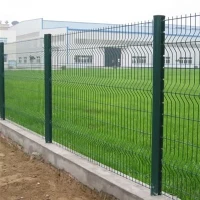


In the realm of industrial materials, crimped wire mesh stands out as a versatile and widely - used product. As a supplier of crimped wire mesh, I often encounter questions from customers regarding its various properties, and one frequently asked question is: Does crimped wire mesh have good static - electricity resistance?
Understanding Crimped Wire Mesh
Before delving into the static - electricity resistance of crimped wire mesh, it's essential to understand what it is. Crimped wire mesh is created by weaving wires that have been crimped at regular intervals. This crimping process gives the mesh its stability and shape. There are different types of crimped wire mesh, such as Heavy Duty Woven Wire Mesh, Crimped Woven Wire Mesh, and Galvanized Crimped Wire Mesh. Each type has its own unique characteristics and applications, but they all share the basic structure of crimped wires.
Factors Affecting Static - Electricity Resistance
The static - electricity resistance of crimped wire mesh is influenced by several factors.
Material Composition
The material from which the wire mesh is made plays a crucial role. Metals are generally good conductors of electricity. For example, if the crimped wire mesh is made of steel, it can conduct electricity relatively well. When static electricity builds up on the surface of the mesh, the metal wires can quickly transfer the charge away, reducing the static - electricity accumulation. On the other hand, if the mesh is made of a non - conductive material or a material with poor conductivity, such as some plastics or coated wires with high - resistance coatings, the static - electricity resistance will be affected. The charge will not be able to flow freely through the mesh, leading to a higher likelihood of static - electricity build - up.


Surface Finish
The surface finish of the crimped wire mesh also impacts its static - electricity resistance. A smooth surface finish allows for easier movement of electrons, which helps in dissipating static electricity. For instance, a polished or galvanized surface can enhance the conductivity of the mesh. Galvanized crimped wire mesh, in particular, has a zinc coating that not only provides corrosion resistance but also improves the electrical conductivity of the mesh. This is because zinc is a good conductor, and the coating forms a continuous conductive layer on the surface of the wires.
Mesh Structure
The structure of the crimped wire mesh, including the wire diameter, mesh size, and crimp pattern, can affect static - electricity resistance. A finer mesh with smaller wire diameters may have a larger surface area, which can increase the contact area for charge transfer. However, if the mesh is too fine, it may also trap air and dust particles, which can act as insulators and impede the flow of static electricity. The crimp pattern can also influence the way the mesh conducts electricity. A well - crimped pattern ensures good contact between the wires, facilitating the flow of electrons and reducing static - electricity build - up.
Testing the Static - Electricity Resistance of Crimped Wire Mesh
To determine the static - electricity resistance of crimped wire mesh, several testing methods can be employed.
Surface Resistance Measurement
One common method is to measure the surface resistance of the mesh. This involves using a specialized instrument, such as a surface resistance meter, to measure the resistance between two points on the surface of the mesh. A lower surface resistance indicates better conductivity and, therefore, better static - electricity resistance. The test is usually conducted under controlled conditions, such as a specific temperature and humidity, to ensure accurate results.
Charge Decay Testing
Another method is charge decay testing. In this test, a known amount of static charge is applied to the surface of the crimped wire mesh, and the time it takes for the charge to decay is measured. A shorter charge - decay time indicates that the mesh can dissipate static electricity more effectively. This test can provide valuable information about the dynamic behavior of the mesh in terms of static - electricity resistance.
Applications and the Importance of Static - Electricity Resistance
The static - electricity resistance of crimped wire mesh is of great importance in many applications.
Industrial Applications
In industrial settings, such as manufacturing plants and warehouses, static electricity can pose a significant risk. It can cause damage to sensitive electronic components, attract dust and debris, and even lead to electrostatic discharges that can ignite flammable substances. Crimped wire mesh with good static - electricity resistance can be used in applications such as conveyor belts, filtration systems, and grounding grids. For example, in a conveyor belt system, the mesh can help to dissipate static electricity generated by the movement of materials, preventing damage to the products being transported.
Electronic Applications
In the electronics industry, where static electricity can damage delicate electronic devices, crimped wire mesh can be used as a shielding material. The mesh can be installed around electronic components to protect them from electrostatic interference. Its ability to conduct and dissipate static electricity makes it an ideal choice for this application.
Conclusion
In conclusion, the static - electricity resistance of crimped wire mesh depends on various factors, including material composition, surface finish, and mesh structure. By carefully selecting the appropriate material and surface treatment, and by optimizing the mesh structure, it is possible to achieve good static - electricity resistance. At our company, we offer a wide range of crimped wire mesh products, including Heavy Duty Woven Wire Mesh, Crimped Woven Wire Mesh, and Galvanized Crimped Wire Mesh, which are designed to meet different static - electricity resistance requirements.
If you are interested in purchasing crimped wire mesh for your specific application, we encourage you to contact us for a detailed discussion. Our team of experts can provide you with the necessary information and guidance to help you make the right choice.
References
- ASTM International. (2019). Standard Test Method for Surface Resistance of Conductive and Static Dissipative Planar Materials. ASTM D257 - 14.
- Groover, M. P. (2010). Fundamentals of Modern Manufacturing: Materials, Processes, and Systems. John Wiley & Sons.