


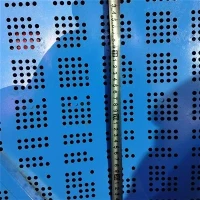

Hey there! As a safety fence supplier, I've been getting a lot of questions lately about the UV resistance of safety fences. So, I thought I'd take a few minutes to break it down for you.
First off, let's talk about what UV resistance actually means. UV, or ultraviolet, rays are a part of the sun's radiation. Over time, exposure to these rays can cause all sorts of damage to materials, like fading, cracking, and weakening. When we say a safety fence has good UV resistance, it means it can withstand the harmful effects of UV rays for a long time without losing its structural integrity or aesthetic appeal.
Now, why is UV resistance so important for safety fences? Well, most safety fences are installed outdoors. Whether it's a Prison Perimeter Security Fence around a correctional facility, a Railway Wire Fence alongside train tracks, or a Workshop Isolation Fence in an industrial setting, they're constantly exposed to the sun. Without proper UV resistance, the fence can start to deteriorate quickly. This not only makes the fence look bad but also compromises its safety function. A weakened fence might not be able to keep intruders out or prevent accidents as effectively.
So, how do we make safety fences UV resistant? There are a few different methods. One common approach is to use materials that naturally have some level of UV resistance. For example, certain types of plastics and polymers are more resistant to UV rays than others. We can also add UV stabilizers to the materials during the manufacturing process. These stabilizers act like a shield, absorbing and dissipating the UV energy before it can cause damage to the fence.
Another way is through the use of coatings. We can apply special UV-resistant paints or finishes to the fence. These coatings form a protective layer on the surface of the fence, preventing the UV rays from reaching the underlying material. The quality of the coating is crucial, though. A cheap or poorly applied coating might not last long and could start to peel or fade after just a few months of sun exposure.
When it comes to different types of safety fences, the level of UV resistance can vary. For instance, a chain-link fence made of galvanized steel might have a different UV resistance profile compared to a PVC-coated fence. Galvanized steel has a zinc coating that provides some protection against corrosion, but it might not be as effective against UV rays on its own. PVC-coated fences, on the other hand, often have better UV resistance because the PVC material itself has some natural resistance and can also be formulated with UV stabilizers.
But it's not just about the material and the coating. The design of the fence also plays a role in its UV resistance. A fence with a lot of small, intricate parts might be more prone to UV damage because the UV rays can penetrate into the nooks and crannies more easily. A simpler, more streamlined design can help reduce the surface area exposed to the sun and make it easier to apply a uniform coating.
Now, let's talk about how you can tell if a safety fence has good UV resistance. One way is to look at the manufacturer's specifications. Reputable suppliers like us will provide detailed information about the UV resistance of our fences. We might mention things like the expected lifespan of the fence under normal sun exposure, the level of UV protection provided by the coating or material, and any testing that has been done to verify the UV resistance.
You can also do a visual inspection. A fence with good UV resistance should look relatively new and intact even after years of sun exposure. There shouldn't be any signs of significant fading, cracking, or peeling. If you see a fence that looks dull, brittle, or has a lot of surface damage, it's likely that its UV resistance is poor.
In addition to the visual inspection, you can also ask for samples. Most suppliers are willing to send you small samples of their fences so you can see and feel the quality for yourself. You can expose the sample to sunlight for a few weeks and see how it holds up. This can give you a good idea of how the full-sized fence will perform over time.
So, if you're in the market for a safety fence, UV resistance should definitely be on your list of considerations. A fence with good UV resistance will not only look better for longer but also provide reliable safety and security. Whether you need a Prison Perimeter Security Fence, a Railway Wire Fence, or a Workshop Isolation Fence, make sure to choose a supplier that can offer high-quality, UV-resistant options.


If you have any questions about our safety fences or want to discuss your specific needs, don't hesitate to reach out. We're here to help you find the perfect fence for your project. Whether it's about UV resistance or any other aspect of the fence, we've got the expertise to guide you through the process.
References
- General knowledge about materials science and fence manufacturing.
- Industry standards and research on UV resistance in outdoor materials.